
Depopulation and war threaten Ukraine’s demographics
The phenomenon of depopulation is affecting the whole world, but in Ukraine its effects are even stronger. Torn between a thirty-year long population decline and the Russian invasion, Ukraine needs to find a balance between demographic safety and wartime future.
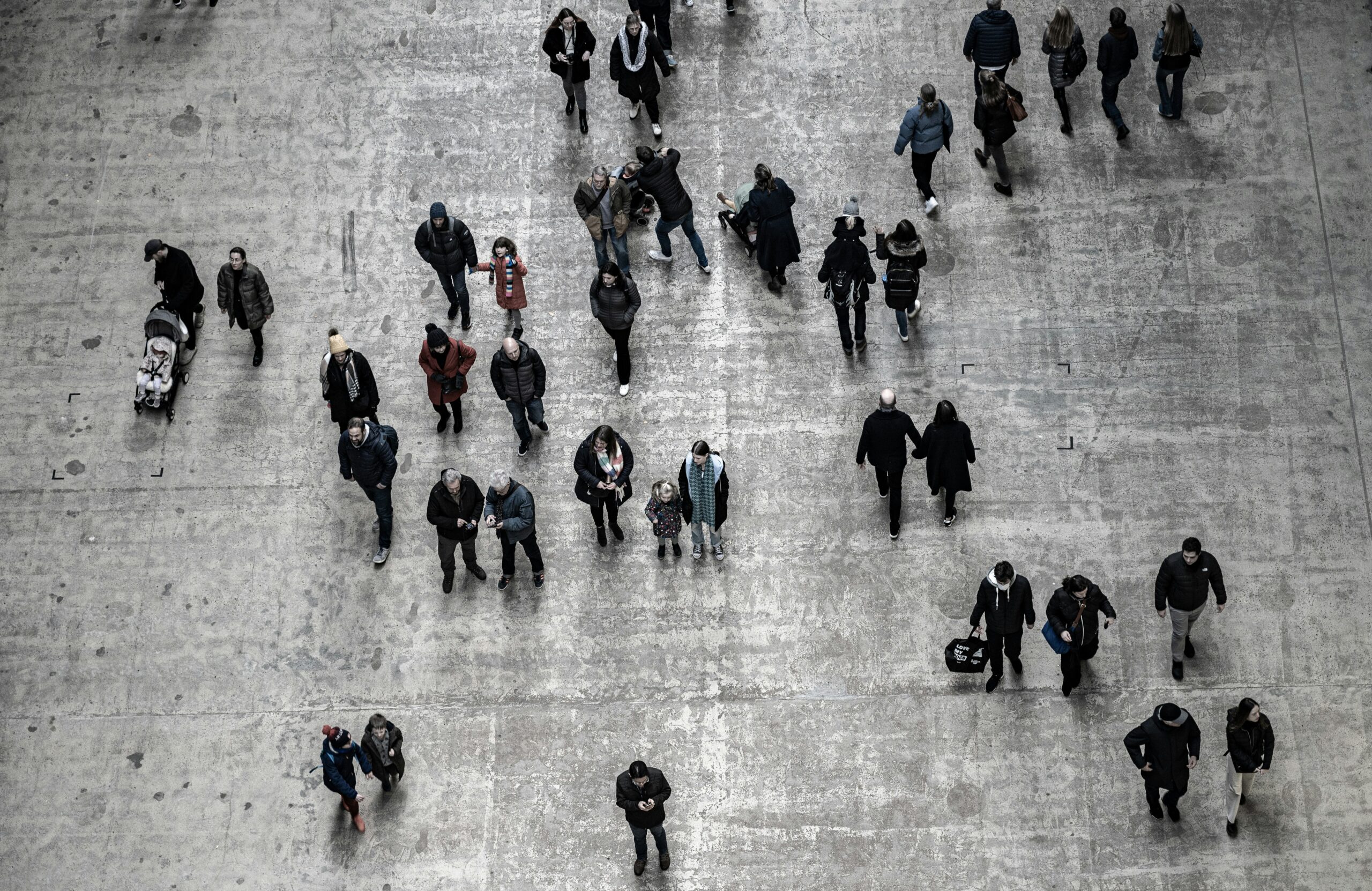
© Oleg Gherlac/Unsplash
“The worldwide population decline is set to begin decades ahead of their expectations,” writes Marc Novicoff in The Atlantic. Whilst United Nations forecasts had estimated that the global decline would begin in 2084, some experts are now predicting 2055.
“The reduction of the population in Ukraine is not a unique case. This is a global process, which in demographic science is called the ‘demographic transition’. What is unique is the situation in which Ukraine finds itself,” explains Oleksander Gladun of the Ptoukha Institute for Demography and Social Studies of the National Academy of Sciences of Ukraine.
In fact, Ukraine is undergoing a severe demographic crisis. As early as 2023, the Kyiv Independent ran the headline “Demographic disaster: Ukraine’s biggest post-war threat”.
Given the often significant loss of military as well as civilian lives, war never has a positive impact on a country’s demographics. Furthermore, Gladun continues, “mortality also rises due to worsening chronic illnesses, stress and, in some cases, the inability to receive timely medical care”. At the same time, birth rates fall, “people postpone the decision to have children. It’s a natural reaction”.
According to data published by the Ukrainian Ministry of Justice and cited by the Kyiv Independent, in 2024 Ukraine recorded 495,090 deaths. This figure is nearly three times higher than the number of births.
According to the latest figures announced by the Ukrainian president Volodymyr Zelensky, Ukraine has lost 55,000 military personnel (both career soldiers and conscripts) in the war against Russia since February 2022. This figure is widely considered to be significantly underestimated. The Centre for Strategic and International Studies (CSIS), a Washington-based think tank, estimates the death toll to be between 100,000 and 140,000, compared to 275,000–325,000 for the Russian army.
“The population of Ukraine has been declining since 1993,” Gladun explains. “The war has greatly accelerated this process. According to our forecasts, the population will continue to decline. However, the pace of this decline depends on the year and conditions under which the war ends“.
Since 1991, when it gained independence from the Soviet Union, Ukraine has lost almost half its population: “According to my estimate, the population of the territory controlled by the government of Ukraine was about 28 million people at the beginning of 2026. At the end of 1991, the population was 51.7 million people”. A projection by the United Nations, cited by Ukrainian Pravda, puts the population at 15.3 million by 2100.
However, as Gladun explains, these figures need to be placed in context. “Firstly, the territory currently under government control is approximately 20% smaller than it was in 1991. Secondly, we do not know the population figures in the territory not controlled by the government. Thirdly, we do not know how many people will return to the country from among those currently fleeing the war in other countries”.
How many Ukrainians are refugees living abroad?
The Centre for Economic Strategy (CES) is an independent Ukrainian non-governmental research centre founded in Kyiv in 2015. According to the centre’s fifth report on refugees, at the start of 2026, 5.6 million Ukrainians were refugees living abroad. Of these, 4 million left Ukraine via the western borders.

“We also have over 4 million internally displaced persons. Therefore, more than 10 million people have left their homes, which is around 20% of the pre-war population,” adds Gladun.
“Ukraine continues to lose population after four years of the full-scale invasion,” confirms Iryna Ippolitova, senior researcher at the CES. “The main reason for demographic losses is migration. According to estimates by the CES, about 300,000 people left Ukraine in 2025. In addition, the population is declining due to losses among both military personnel and civilians caused by the war, as well as due to falling birth rates”.
In late August 2025, the Ukrainian government liberalised cross-border movement for men aged between 18 and 22, and allowed men aged 23 and over living abroad to return temporarily to Ukraine. Up to that point, martial law in force since the start of the Russian invasion in 2022 had prohibited all men aged between 18 and 60 from leaving the country, with rare exceptions. The aim was to ensure the army had a sufficient number of recruits. “We want Ukrainians to maintain as many ties with Ukraine as possible,” Prime Minister Yulia Svyrydenko stated. Thus, the government has to balance the demands of war with the need to preserve the younger generations and safeguard the nation’s future.
According to data from the CES, approximately 96,000 men emigrated between August and November 2025. The CSE is using Polish, Slovak, and Romanian Border Guards data, and estimation of DPSU data. Figures for Hungary and Moldova are proportionally extrapolated based on Ukrainian Border Guard data on total border.
“Roughly one out of every seven young men between 18 and 22 years of age exited the country since August,” the report states. According to BBC Ukraine, this data does not account for the return of a significant number of young men, nor do they take into account the fact that a single person may have crossed the border several times. The Kyiv Independent reports that young men are quitting their jobs, but it also maintains that it is not possible to give exact figures.
How many will return?
The CES estimates that between 1.3 and 2.2 million people could return to Ukraine once the war ends, depending on the scenario.
“The decision to return will be influenced by a whole range of factors: the availability of housing in Ukraine, employment opportunities, social infrastructure for children, etc. People will compare what they have in their host country with the opportunities in Ukraine. The degree of adaptation to the new country will also play a role,” explains Oleksander Gladun.
And, of course, a key factor is how – and under what conditions – the war will end. “Two years ago a survey showed that 25% more people would return if the war ended within the 1991 borders than if it ended along the current front line”. It is a widely held view “that if the war ends at the front line, the Russian Federation will resume it in a few years,” says Gladun.
Of Ukrainian citizens abroad, 66% are of working age (18–65). Young people (those under 35) account for more than half of Ukrainian refugees (56%). They are the country’s lifeblood. However, according to CES data, they are also the demographic segment that will be less inclined to return.
“Currently,” explains Iryna Ippolitova of the CES, “we see that young people under 35 are much less likely to return to Ukraine than older people, especially those over 50. There are many reasons for this. These include better integration in host countries, economic factors such as jobs and salaries, and most importantly, security risks. The return of these people is possible under certain conditions. First, there must be security and an end to the war. The way in which the war ends is also important for this generation: most refugees consider returning only if the war fully ends and civilian flights resume in Ukraine. A frozen conflict would have a much smaller impact on refugees’ willingness to return.”
Vitaly (a pseudonym) is one such refugee. 19 years old and living in France for the last two years, Vitaly is originally from the south of Ukraine, and moved to the west of the country when the war broke out. He came to France to continue his studies, because the outbreak of war meant he lost the chance of a scholarship. Vitaly considered a number of destinations, including the Czech Republic and Poland. He ultimately chose France because “I realised I had to aim for something bigger”.
Today, Vitaly works on building sites or as a sales assistant. In September, he aims to enroll for an engineering degree. Vitaly is one of countless young people who have embarked on a tough and complicated journey in another country, and who now aim to establish a new life for themselves. Vitaly has a plan, a vision for the future, and is eager not to “waste” the sacrifice he made. “I’d like to stay here; I’ve already learnt French, worked hard, and I want to go to university”. Vitaly misses Ukraine, his family and the places he knows, but returning doesn’t seem like a viable option.
“I’d say I’d go back if I were lucky enough to find a good, well-paid job in Ukraine. But at the moment, Ukraine’s economy has deteriorated,” says Antonina, 27, who has been in Italy with her mother since 2022. Originally from Kharkiv, Antonina is now a Master’s student in European and International Studies. In terms of security, the situation in Ukraine remains very precarious. “One of the main reasons is that we don’t know when the war will end. We don’t know if we’re at the beginning or right in the middle of it. I don’t want to put my life on hold. I believe the right thing to do is to start my career, and perhaps I’ll be successful, perhaps I’ll meet my partner and start a family.”
Currently, Ukrainians benefit from “temporary protection” in EU countries. This special status allows Ukrainians to study, work, and access the national healthcare system. Introduced in March 2022, it is set to expire in March 2027.
For the moment, it is not known what EU countries will do after this date. German Chancellor Friedrich Merz has already reiterated that he wants to limit the number of Ukrainian men seeking asylum. The plan is to facilitate the return of refugees to their homeland, so that “they can help their own country”, he says.
Would EU membership change the trend?
In episode four of the second season of Servant of the People (the 2015-19 TV series in which Volodymyr Zelensky plays a history teacher who becomes president of Ukraine), it is announced that the European Union has approved visa-free travel for Ukrainian citizens, marking a first step towards EU membership.
The next day, President Vasyl Petrovych Holoborodko finds himself all alone in Ukraine, because all his fellow citizens have left to seek their fortune in Europe. Back in October 2017, this story may have felt gently ironic, but now, nearly nine years on, with four of those years spent at war, it leaves a decidedly bitter aftertaste: Kyiv is still eager to join the European Union, and Ukraine is genuinely emptying out.
“It is still difficult to clearly predict the effects of Ukraine joining the EU,” says Iryna Ippolitova of the CES. “The experience of Central European countries suggests that some people may leave, as they will gain the opportunity to work legally in the EU”. However, freedom of movement may also “encourage some migrants to return and support circular migration among Ukrainians who currently do not consider returning because they are afraid of losing their right to work and live in the EU”. At the same time, Ippolitova adds, “Ukraine could attract professionals from the EU during the reconstruction phase”.
| Population decline and demographic replacement |
| Around 20% of Ukrainian territory is occupied by the Russian army. And the country’s future depends in part on what happens in those territories. “What is unfolding in the occupied territories of Ukraine – in Mariupol above all, but also across swathes of Donetsk, Luhansk, Zaporizhzhia and Kherson oblasts – is the deliberate erasure of a Ukrainian population and its substitution with a Russian one,” writes researcher Jade McGlynn in Engelsberg Ideas.
The case of Mariupol, explains McGlynn, is particularly telling: the city had a population of around 450,000 people before the 2022 invasion; today, according to various estimates, there are 100,000 residents, 70% of whom are over 60. The birth rate here is much lower than in the rest of Ukraine, and people are leaving every month. The city, the scene of one of the bloodiest battles of the war, is dying out. At the same time, a process of replacement is underway: “According to data provided by the Centre for the Study of Occupation on settler inflows, the number of Russian citizens in Mariupol increased by at least 80,000 between 2023 and 2025, at a current rate of approximately 2,200 per month. On these projections, Russians will numerically outnumber those who called Mariupol home before the invasion by the end of this year; within three years, by more than two to one; within a decade, the replacement will be near-total”. |
According to demographer Oleksander Gladun, accession remains a distant prospect. Assuming it happens, “it is unlikely to trigger a mass exodus of the population”. Ukraine was already partially integrated into the European labour market by 2022: “By the end of 2021, 1.6 million Ukrainians held residence permits in EU countries, 900,000 of whom were there for work purposes”.
For Ippolitova, “Ukraine’s accession to the EU offers substantial benefits for both Ukraine and the European Union, despite the challenges that such integration inevitably entails”. For Ukraine, the process will guarantee the “access to the EU single market, funding instruments, and programmes”, Ukraine also will be able to benefit from “stronger worker protections, safer products and services, and improved environmental regulation”, Ippolitova adds.
The more secure a country feels – socially, economically and militarily – the more its inhabitants will be able to envisage a future. In terms of security, which is a central question for Ukraine, “EU membership would strengthen Ukraine’s economic and institutional resilience and deepen its integration into European security frameworks”. At the same time, Ukraine “contributes significantly to European security through its defence capacity, strategic position, and experience in countering external threats”.
Meanwhile, EU capitals recently ruled out fast-track accession for Ukraine, with member states rejecting the European Commission’s “reverse enlargement” proposal to admit Kyiv before reforms were completed, Politico reports. Instead, they are promoting an “accelerated gradual integration” model to bring Ukraine closer to the bloc without offering it immediate membership.
This plan would grant Ukraine greater access to the single market, EU programmes and institutions, providing short-term economic benefits that could stabilise war-induced displacement and population decline, while alleviating emigration pressures.
The next steps include opening accession negotiations in the coming weeks, following the political shift in Hungary after Viktor Orbán’s electoral defeat. Even in an optimistic scenario, Kyiv could only close chapters by 2027, and full membership would require unanimous approval from all EU states.
Original article: https://voxeurop.eu/en/wartime-demographics-ukraine-population-shrinking/.
